

Fennel Varieties and Main Characteristics
The choice of variety is one of the most strategic decisions in fennel cultivation.
In recent decades, the seed market has increasingly shifted toward high-performing hybrids, developed to meet very specific requirements in terms of crop cycle and harvest schedule.
The cultivars differ in terms of:

Vegetative Cycle
early, medium, or late

Bulb Size
from small (about 400 g) to large (up to 800 g)
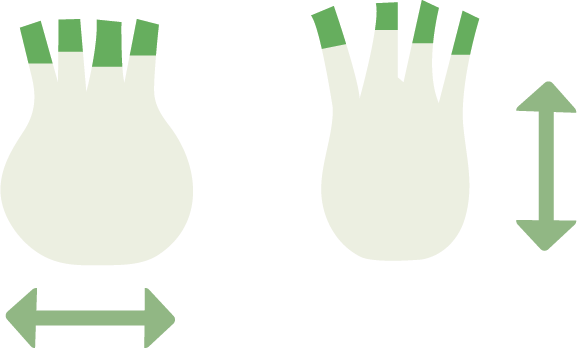
Forma
globular or elongated

Plant Growth Habit
erect or spreading

Adaptability to Local Conditions
resistance to cold and premature flowering

Ciclo colturale del finocchio: precoce, medio e tardivo
| Ciclo colturale | Durata | Caratteristiche |
|---|---|---|
| Ciclo precoce | 70-90 giorni dal trapianto | Indicato per semine estive e raccolte autunnali. Adatto alle produzioni intensive con più cicli durante l'anno. |
| Ciclo medio | 90-120 giorni | Offre un buon equilibrio tra pezzatura e resistenza. |
| Ciclo tardivo | 130-180 giorni | Indicato per semine autunnali e raccolte invernali e primaverili. Presenta una maggiore resistenza al freddo. |
white or bright white color, medium-to-large size, a round to globular shape with broad shoulders, thick, crisp, tightly packed sheaths, and low susceptibility to bulb cracking.
This requirement influences both the choice of variety and the subsequent agronomic practices, including earthing up.
When to Sow Fennel

Below 7 °C
Critical temperature
The plant suffers, increasing the risk of rot.

Between 15 °C and 20 °C
Optimal range
Ideal conditions for germination and bulb development.
Germination: approximately 10–12 days.

Above 30 °C
High risk
The plant tends to flower prematurely, compromising the harvest.
Fennel Sowing and Harvesting Period

Direct Mechanical Sowing
From June to September
Autumn and winter harvest from October to January.
Typical of Southern Italy.

Autumn Sowing
From September to October
Winter harvest.
Requires protection from cold during the most critical growth stages.

Spring Sowing
From March to April
For summer harvesting in June.
Less common in Southern Italy due to the risk of early heat.

Male and Female Fennel: A Common Myth
People often refer to “male” and “female” fennel, but botanically this distinction does not exist.
Fennel produces hermaphroditic flowers, containing both male and female reproductive organs.
The distinction comes from the shape of the bulb:

Male Fennel
rounded, broad, and well-developed

Female Fennel
elongated and flattened

In reality, bulb shape depends mainly on the variety, as well as on environmental conditions and the agronomic techniques used.
Growing Fennel with APOD Technical Support
Frequently Asked Questions About Fennel