

Fennel Cultivation: Varieties and Crop Cycle

Fennel (Foeniculum vulgare var. dulce) is an annual plant in the Apiaceae family, mainly grown for its white, fleshy bulb.

Explore the content

Fennel Varieties and Main Characteristics

The choice of variety is one of the most strategic decisions in fennel cultivation.

In recent decades, the seed market has increasingly shifted toward high-performing hybrids, developed to meet very specific requirements in terms of crop cycle and harvest schedule.

The cultivars differ in terms of:

Cycle icon

Vegetative Cycle

early, medium, or late

Bulb Size

from small (about 400 g) to large (up to 800 g)
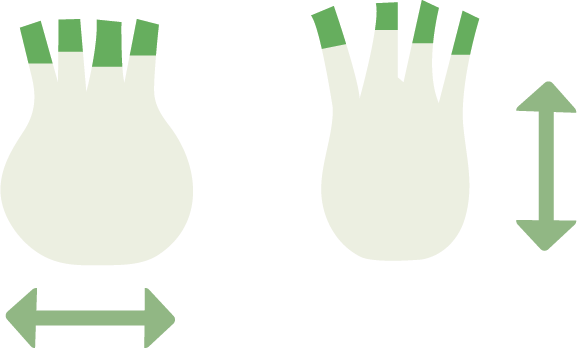
Fennel Variety Shape Icon

Forma

globular or elongated

Plant Growth Habit Arrow Icon

Plant Growth Habit

erect or spreading

Adaptability to Local Conditions

resistance to cold and premature flowering

Ciclo colturale del finocchio: precoce, medio e tardivo
Confronto rapido

Ciclo colturale del finocchio: precoce, medio e tardivo

Durata e caratteristiche dei diversi cicli colturali
Ciclo colturaleDurataCaratteristiche
Ciclo precoce70-90 giorni dal trapiantoIndicato per semine estive e raccolte autunnali. Adatto alle produzioni intensive con più cicli durante l'anno.
Ciclo medio90-120 giorniOffre un buon equilibrio tra pezzatura e resistenza.
Ciclo tardivo130-180 giorniIndicato per semine autunnali e raccolte invernali e primaverili. Presenta una maggiore resistenza al freddo.
For the market, the ideal fennel bulb still follows a fairly precise standard:
white or bright white color, medium-to-large size, a round to globular shape with broad shoulders, thick, crisp, tightly packed sheaths, and low susceptibility to bulb cracking.
This requirement influences both the choice of variety and the subsequent agronomic practices, including earthing up.

When to Sow Fennel

Fennel is a temperature-sensitive crop, and this is the key factor around which large-scale sowing plans are organized.

Below 7 °C
Critical temperature

The plant suffers, increasing the risk of rot.

Between 15 °C and 20 °C
Optimal range

Ideal conditions for germination and bulb development.
Germination
: approximately 10–12 days.

Above 30 °C
High risk

The plant tends to flower prematurely, compromising the harvest.

The fennel sowing period therefore varies significantly depending on the growing area.

Fennel Sowing and Harvesting Period

Direct Mechanical Sowing

From June to September
Autumn and winter harvest from October to January.
Typical of Southern Italy.

Autumn Leaf Icon

Autumn Sowing

From September to October

Winter harvest.
Requires protection from cold during the most critical growth stages.

Spring Flower Icon

Spring Sowing

From March to April

For summer harvesting in June.
Less common in Southern Italy due to the risk of early heat.

At the national level, the introduction of new hybrids has effectively made year-round fennel cultivation possible, by staggering sowing periods across different growing areas.

Male and Female Fennel: A Common Myth

People often refer to “male” and “female” fennel, but botanically this distinction does not exist. Fennel produces hermaphroditic flowers, containing both male and female reproductive organs.

The distinction comes from the shape of the bulb:

Male Fennel Icon

Male Fennel

rounded, broad, and well-developed

Female Fennel Icon

Female Fennel

elongated and flattened

However, this is simply a popular convention. The terms “male” and “female” only describe the shape of the bulb and not the sex of the plant.


In reality, bulb shape depends mainly on the variety, as well as on environmental conditions and the agronomic techniques used.
fennel

Growing Fennel with APOD Technical Support

APOD supports its members in variety selection, crop scheduling, and sowing and transplanting operations, providing certified plant material and dedicated agronomic advice.

Frequently Asked Questions About Fennel

How Long Does the Fennel Crop Cycle Last?
The crop cycle varies depending on the variety: early fennel matures in about 70–90 days after transplanting, mid-cycle varieties in 90–120 days, while late varieties may require up to 130–180 days.
The sowing period depends on the growing area and the variety. Generally, fennel is sown from June to September for autumn and winter harvests, from September to October for winter harvests, and from March to April for summer production.
Fennel grows best at temperatures between 15 °C and 20 °C.
Fennel intended for the market should have a white, compact, round-to-globular bulb, with thick, crisp, tightly packed sheaths and good resistance to cracking.
From a botanical perspective, there are no male or female fennel plants. The terms simply describe the shape of the bulb, which is determined by the variety and growing conditions.

You may also like…

Agricultural logistics: from the field to industry, how it works

Industrial tomato logistics reduces the time between harvesting and delivery, helping preserve product quality and value.