Desertification and drought: a challenge for agriculture
When we talk about desertification, we often tend to think of distant territories.
In reality, this phenomenon is increasingly affecting the Mediterranean area and Italy as well, where rising temperatures, decreasing rainfall, and the growing frequency of extreme weather events are changing the balance of agricultural ecosystems.
For the agricultural sector, which uses around 70% of the world’s water resources, the availability and efficient management of water are now key factors in ensuring productivity, crop quality, and sustainable cultivation.
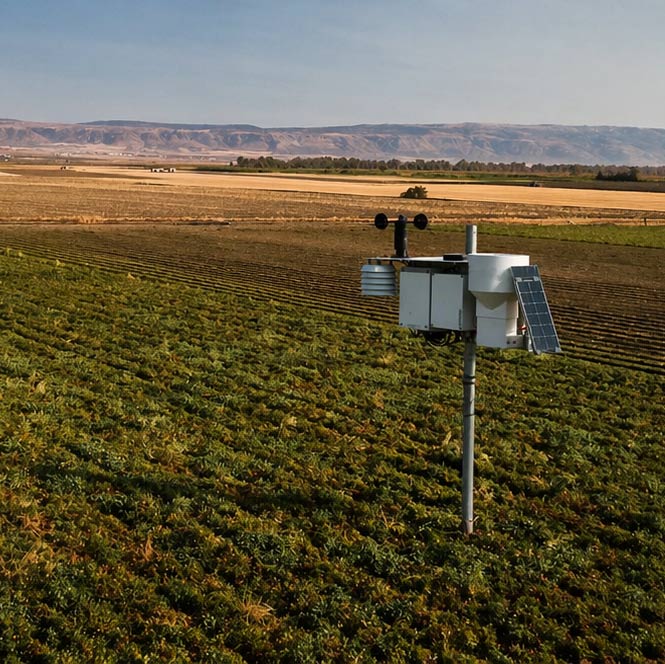
Tools such as agrometeorological stations and DSS models, already available to APOD members, move precisely in this direction: transforming climate data into precise and traceable agronomic decisions.
Agriculture is both part of the problem and part of the solution
The restoration of degraded ecosystems has the potential to store up to 3 billion tonnes of carbon each year.
Their rehabilitation, combined with sustainable management, is one of the most effective tools for addressing climate change.
Practices considered unsustainable, such as intensive monocultures and the indiscriminate use of chemicals, impoverish the soil, reduce biodiversity, and increase vulnerability to drought.
Reversing this trend means adopting a management model that places soil health at the centre, as a prerequisite for long-term productivity.

SPRING Certification: criteria, requirements, and benefits for the supply chain
To support more efficient and sustainable water resource management, the SPRING certification — Sustainable Program for Irrigation and Groundwater Use — was developed. APOD has undergone this certification process.
This standard demonstrates a concrete commitment to sustainable water management through a third-party certification that is recognised and verifiable throughout the entire supply chain.
The criteria assessed by SPRING certification

Legal compliance
Verification of compliance with current regulations on water extraction.

Water consumption monitoring
Measurement and recording of water consumption in m³/ha/year.

Good water management practices
Use of tools such as tensiometers to optimise irrigation volumes according to the actual needs of the crop.

Protection of water sources
Measures to protect water sources within the relevant river basin.

Continuous improvement
A documented commitment to improving water management efficiency over time.

Impact on the basin
Assessment of the company’s impact on the local river basin.
What SPRING certification means for APOD member farmers
For producers within the OP APOD supply chain, SPRING certification is an operational tool that translates into tangible savings, reduced water stress on crops, and more consistent product quality.
It also provides a verifiable guarantee for buyers: purchasing from a certified producer organisation means being able to document the water sustainability of their supply chain, respond to growing ESG reporting requirements, and access markets that are increasingly attentive to the responsible origin of ingredients.
SQNPI Certification
APOD’s path also includes SQNPI certification, a further recognition of integrated production practices that respect ecosystems.
Discover more about APOD’s SPRING certification journey
The World Day to Combat Desertification reminds us that environmental challenges do not stop at company boundaries.
Soil degradation, water scarcity, and climate change are systemic phenomena that require coordinated responses from farmers, cooperatives, public bodies, the food industry, and the retail sector.
17 June: World Day to Combat Desertification and Drought
The World Day to Combat Desertification and Drought was established by the United Nations in 1994. Its aim is to limit land degradation in order to ensure food and water security, mitigate climate change, and create new economic opportunities.
The global challenge is ambitious: to restore 1.5 billion hectares of land by 2030 and contribute to the development of a trillion-dollar regenerative economy.
Data and tools to support water management
SPRING certification is part of a broader technical support pathway for APOD members, which also includes the use of agrometeorological stations and DSS systems for agriculture.
Through the collection and analysis of climate and agronomic data, these tools help farmers plan irrigation interventions more precisely, reducing waste and improving water use efficiency.
This is a concrete approach that turns sustainability into everyday operational decisions, benefiting crops, production quality, and the protection of natural resources.
Frequently asked questions about SPRING certification
What is SPRING certification?
SPRING certification — Sustainable Program for Irrigation and Groundwater Use — is an international standard that certifies the sustainable management of water resources in agriculture. It is issued by an independent third-party body and is verifiable throughout the entire production supply chain.
Which criteria does SPRING certification assess?
SPRING certification assesses six main areas: compliance with regulations on water extraction, monitoring of water consumption in m³/ha/year, the adoption of good irrigation practices — such as the use of tensiometers — the protection of water sources within the relevant basin, a documented commitment to continuous improvement, and the assessment of the company’s impact on the local river basin.
Why has APOD obtained SPRING certification?
APOD chose SPRING certification to provide verifiable evidence of its commitment to responsible water management, a resource that is increasingly critical for Mediterranean agriculture. The certification allows member farmers to optimise water consumption and enables buyers to document the sustainability of their supply chain.
What benefits does SPRING certification bring to APOD member farmers?
For producers within the APOD supply chain, SPRING certification translates into more efficient water use, reduced water stress on crops, and greater consistency in production quality. It also represents a concrete tool for accessing markets that are sensitive to sustainability and for meeting ESG reporting requirements.
Is SPRING certification recognised by large-scale retail and the food industry?
Yes. SPRING certification is a recognised standard that enables buyers — including retailers and the food industry — to document the water sustainability of their supply chain, in response to growing demands for ESG reporting and responsible sourcing.
What is the difference between SPRING certification and SQNPI certification?
SPRING certification focuses specifically on the sustainable management of water resources, while SQNPI certification — the Italian National Quality System for Integrated Production — certifies compliance with integrated production guidelines that limit the use of chemicals and protect ecosystems. APOD holds both certifications, confirming a comprehensive approach to agricultural sustainability.